
Including Your Toddler in the Newborn Session: The Real, Honest Guide
They will wriggle. They will refuse. They will try to poke the baby. And then, unexpectedly, something gentle happens and makes everyone in the room cry. This is why you include them.
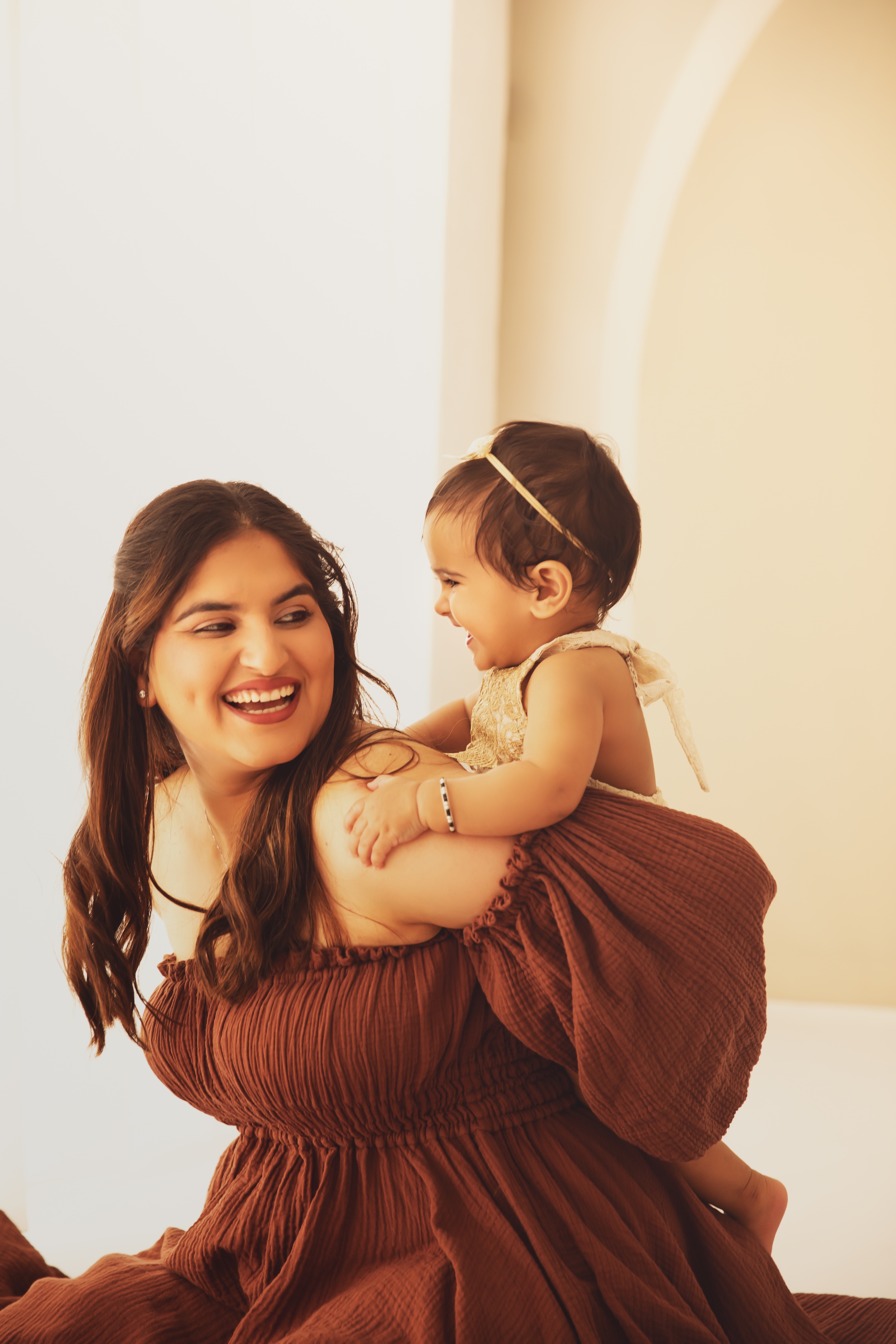
Parents ask me some version of the same thing before almost every session that involves an older sibling: What if they don't cooperate? What if they ruin it?
I want to answer this with care, because the anxiety underneath these questions is real and worth taking seriously. Here is what I know after photographing siblings more times than I can count: the sessions where an older child is "difficult"—refusing to sit or wanting to do everything except what we’d like—almost always produce images that are just as beautiful as the cooperative ones.
Sometimes more so. A child being fully, unselfconsciously themselves in front of a camera is a gorgeous thing to photograph. The moments that happen in the in-between—when nobody is performing—those are the ones that last forever.
How I Actually Run Sibling Time
I do not bring the older sibling in at the start of the session. This is a deliberate choice that makes a real difference to how the whole session feels. In the first part of a newborn session, we are doing the quiet baby-led storytelling—capturing the tiny details while the room is warm and still.
A curious toddler is wonderful, but not for this particular part. So I ask that siblings arrive fresh when we are ready for them—not bored or waiting-weary, but ready to meet the baby properly. I let them lead the way in and see the baby before I ask them to do anything at all. Children are so much more generous with their attention once they have had a chance to simply look on their own terms.
What Natural Sibling Images Actually Look Like
The Lean: An older child leaning in with total, unguarded fascination. It is one of the most moving things I photograph, session after session.
The Touch: A small hand placed with surprising gentleness on the newborn’s head or cheek. Children who have been wriggly often become extraordinarily tender the moment they actually touch the baby.
The Beautiful Chaos: The grinning, the wriggling, the enthusiastic kiss that turns into a near-headbutt. In twenty years, you will look at that image and remember exactly what your child was like at two and a half. That is the point of storytelling photography.
WHAT ACTUALLY HELPS WITH SIBLING SESSIONS
- Bring a small snack—their favourite, nothing unfamiliar
- Tell them simply what will happen, without high expectations
- Fresh energy at the end of the session works best
- Let them say hello to the baby before we start any photos
- Trust that imperfect moments make the most perfect images
The Image You Will Look at for the Rest of Your Life
Your older child was an only child last week. This week they are a sibling. Their world has rearranged itself around a new person, and they are doing the enormous work of figuring out how to love something they are still getting to know.
That is a story worth photographing—the sudden gentleness, the forehead pressed to a tiny forehead. One day, your older child will look at that image and know: I was there. I was the first one to meet them. And it meant something.